

Cocktail Photoshoot: Behind the Scenes & Kit Breakdown
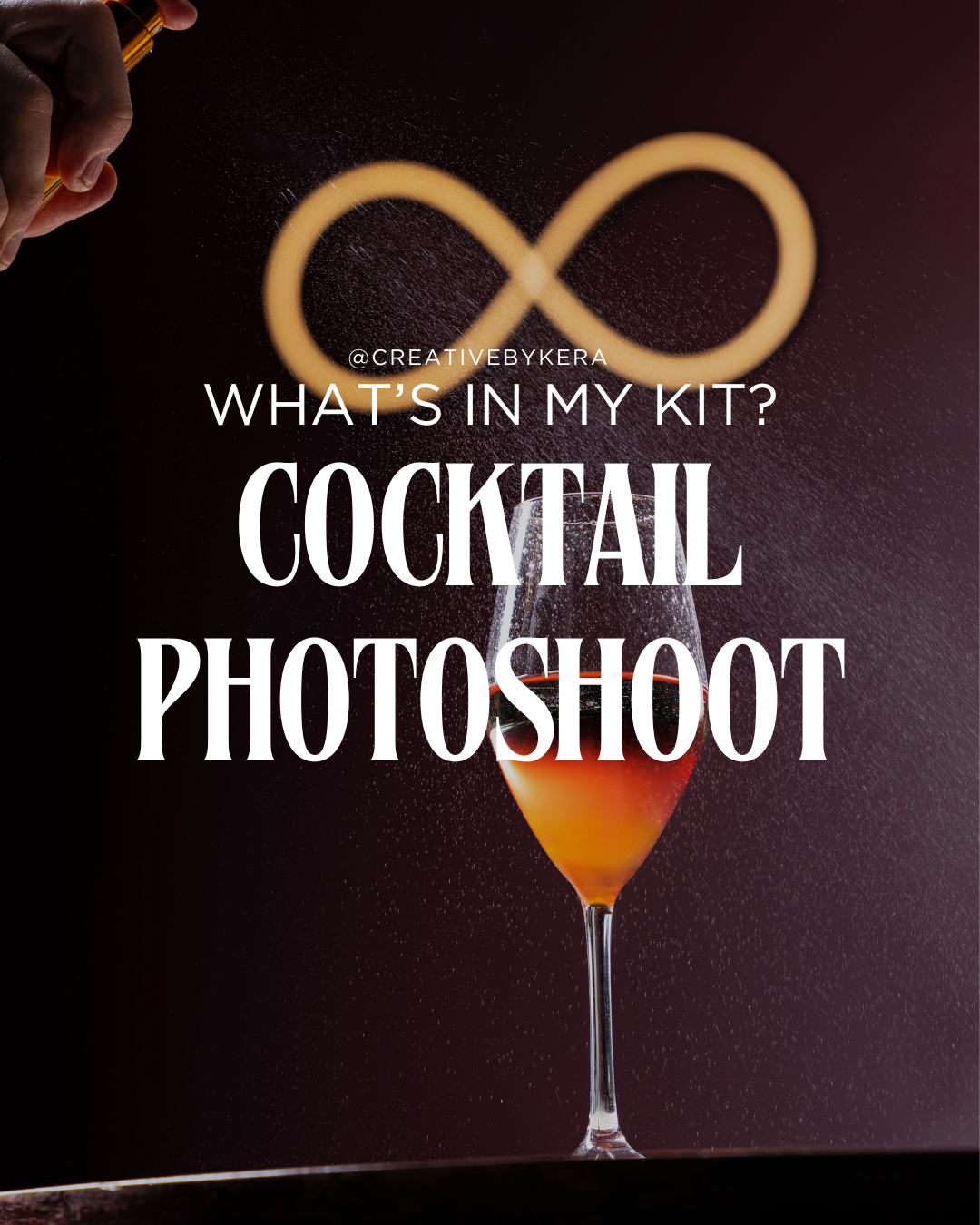
Cocktail Photoshoot: Behind the Scenes & Kit Breakdown
Creating stunning, high-impact product photography often requires bringing studio-quality lighting into real-world, dynamic environments. For this recent cocktail shoot, the goal was to capture the vibrant colours, intricate details, and unique preparation of a signature drink, all within the ambiance of a bustling bar. The challenge was maintaining a deep, dramatic look that makes the cocktail pop, while still allowing the viewer to appreciate the context. The resulting images with their rich contrast and beautiful, controlled highlights show just how powerful a portable lighting setup can be when paired with a clear creative vision.
The Lighting Setup: Profoto Power
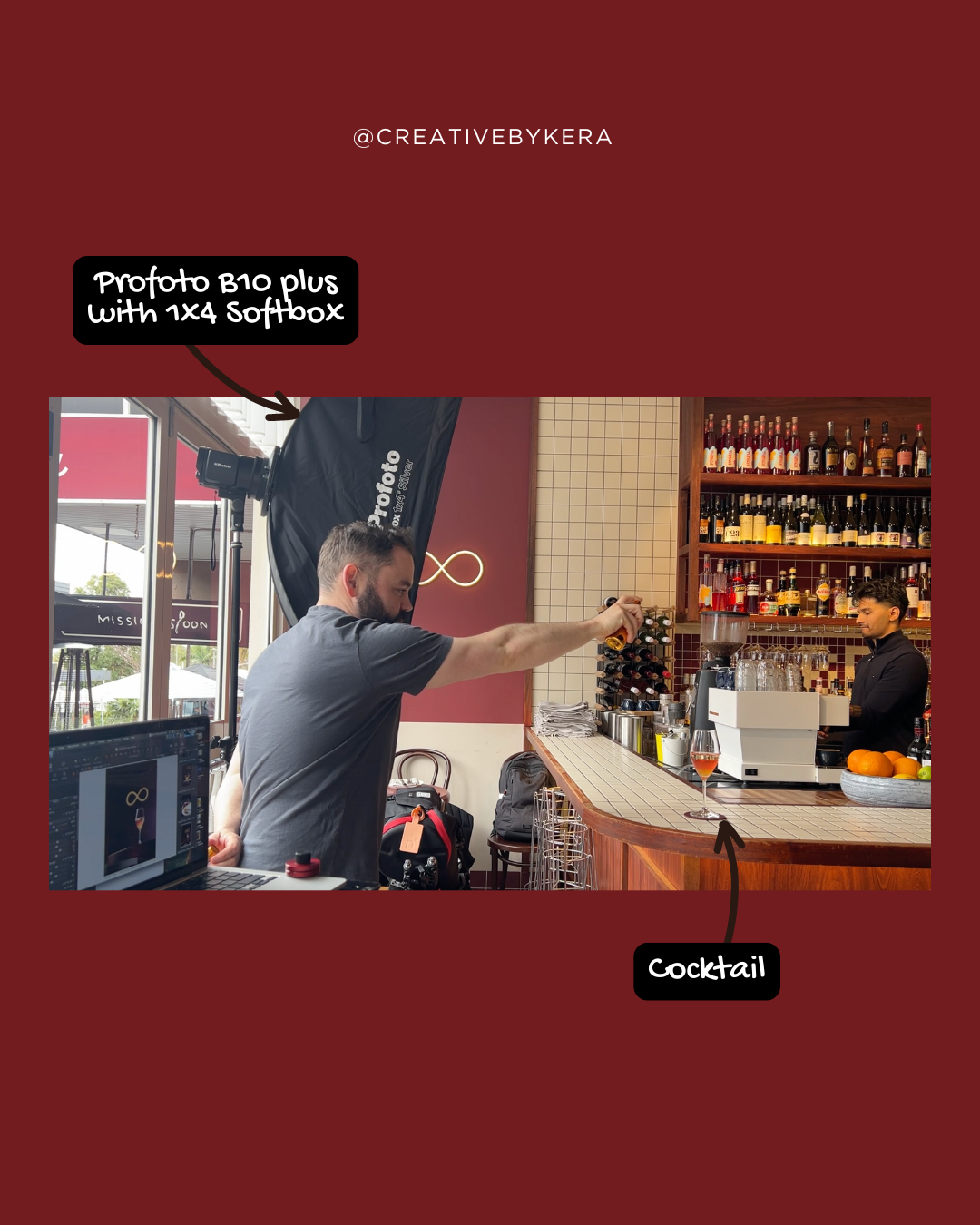
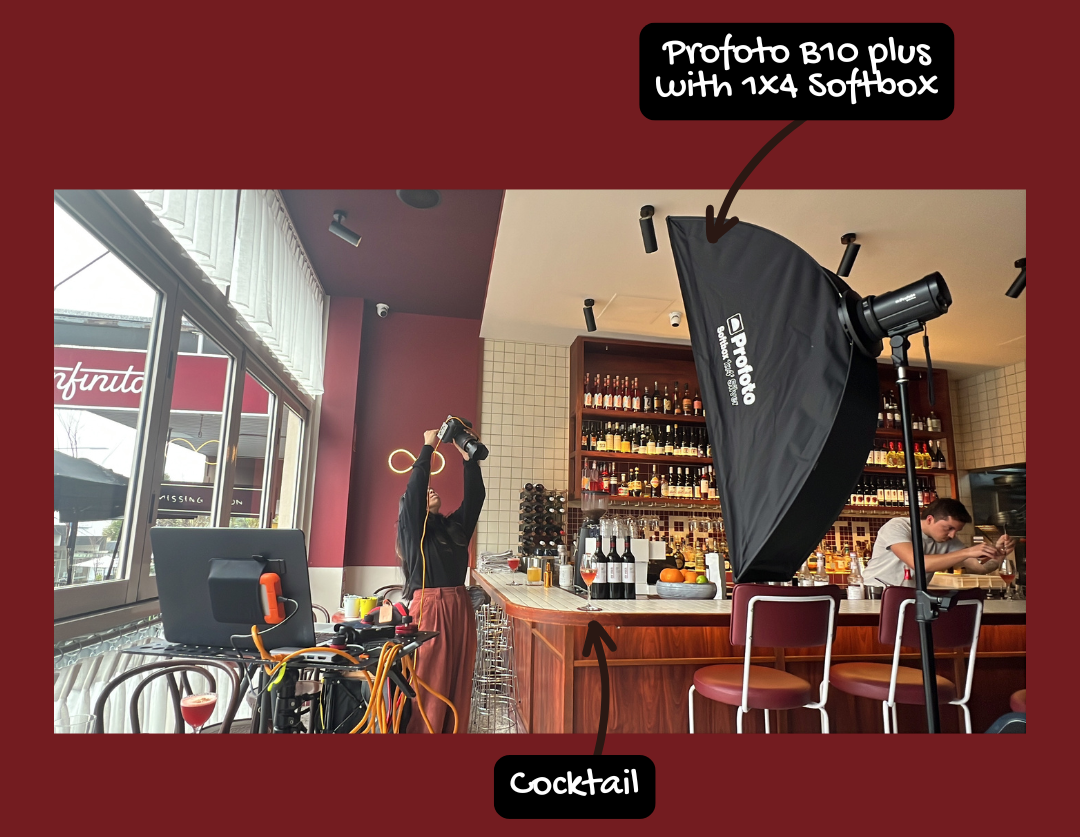
To achieve this dramatic yet clean aesthetic, our kit relied heavily on one key piece of gear: the Profoto B10 Plus with a 1x4 Softbox. This combination is an absolute game-changer for on-location food and drink photography. The B10 Plus provides ample power in a compact form factor, making it easy to deploy quickly in a tight bar space (as seen in the behind-the-scenes shots). The 1x4 Softbox is crucial for this type of shot. Its long, narrow shape acts as a powerful edge light, delivering a gorgeous strip of highlight across the glass and liquid. By carefully positioning this light high and often slightly behind the subject, we were able to separate the cocktail from the dark background, creating that signature, professional glow and capturing the texture of the spray action.
Capturing the Dynamic Moment
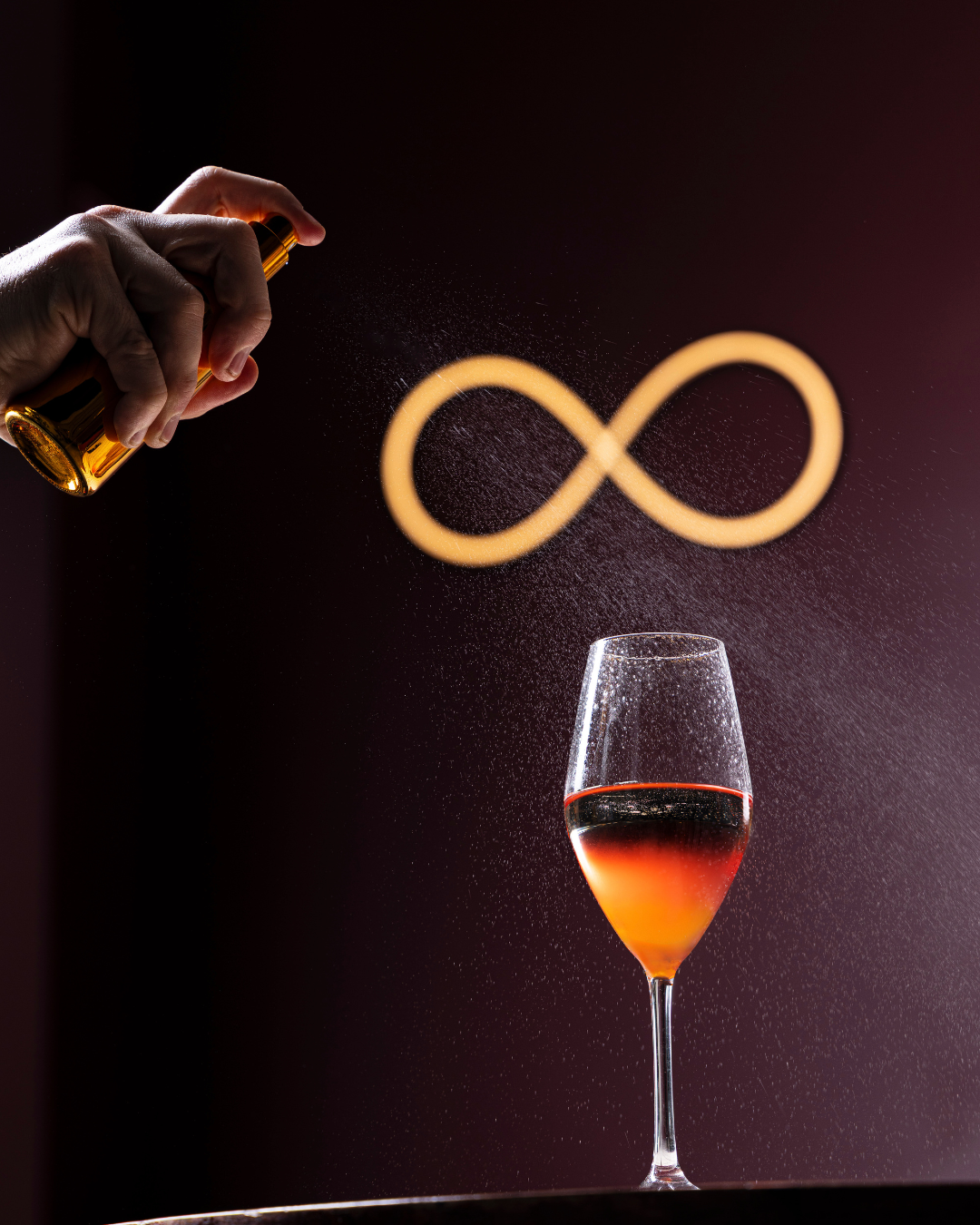
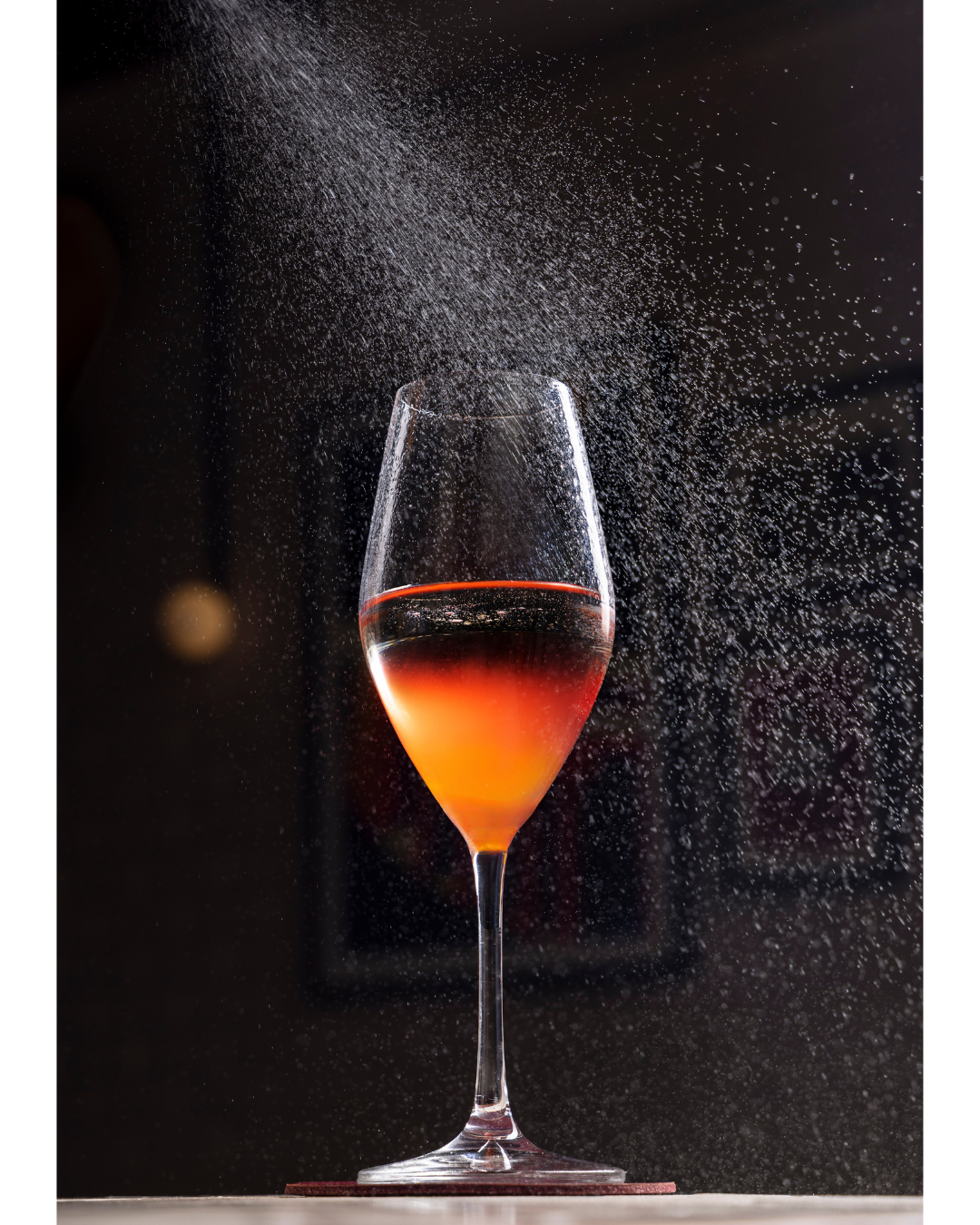
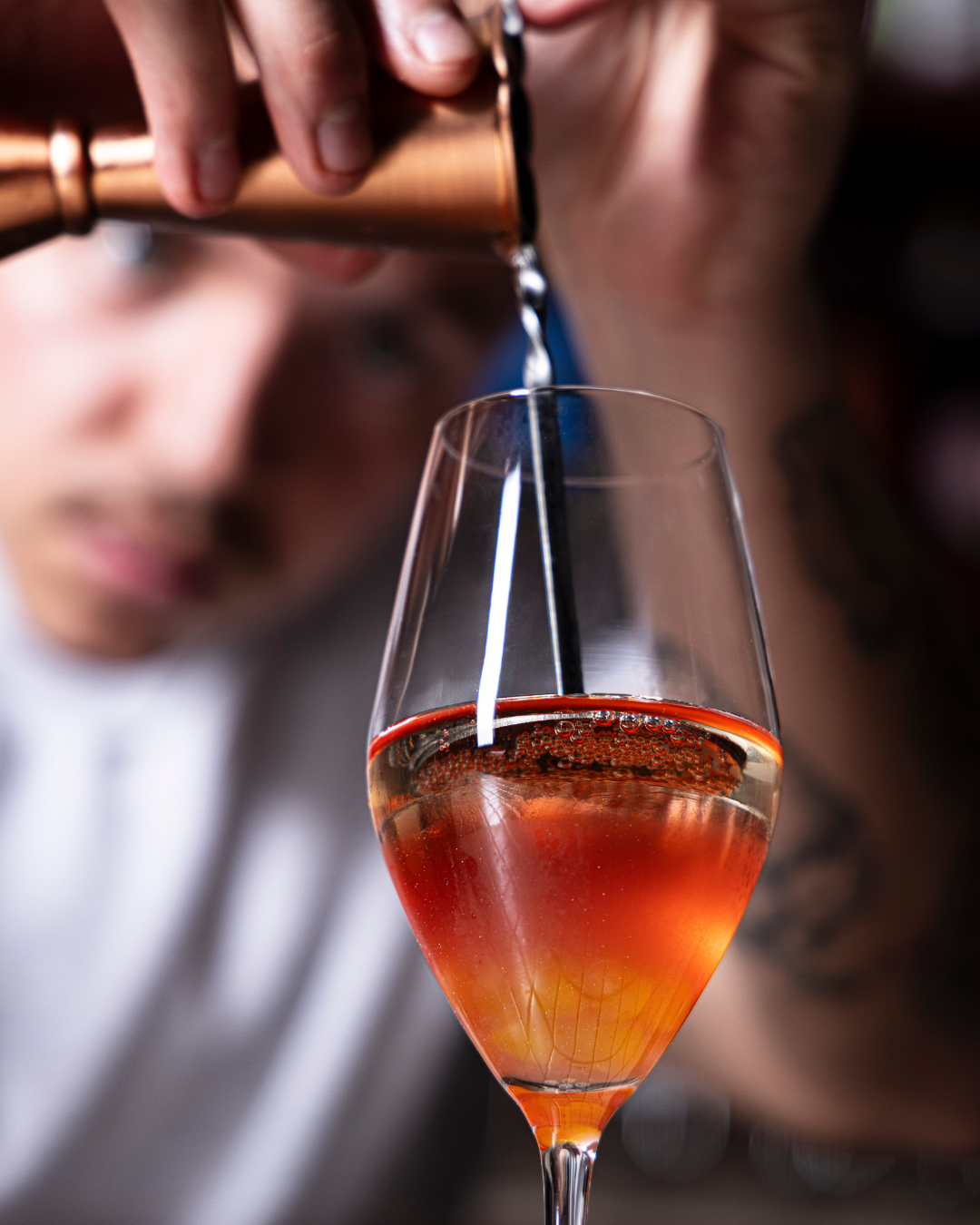
The true magic in drink photography often lies in capturing a dynamic moment, the pour, the garnish placement, or in this case, a fine mist being sprayed over the glass. As evidenced by the stunning final shot, the high-speed sync capabilities of the Profoto B10 Plus allowed us to perfectly freeze the action of the spray, turning individual droplets into sparkling elements. This level of control, combined with the sharp focus on the layers within the drink and the subtle light shape of the infinity sign in the background, elevates the image from a simple product photo to a piece of visual art. It showcases not just the final product, but the artistry of the bartender as well.
Technical Camera Settings
The goal of freezing action while maintaining deep contrast and sharpness guides the choice of aperture, shutter speed, and ISO.
Aperture f/8 to f/11
Depth of Field: This range ensures the entire cocktail glass, from the base of the stem to the rim, is critically sharp. A wider aperture (like f/2.8) would blur too much of the glass, while a smaller one (like f/16) might introduce diffraction, softening the image.
Shutter Speed 1/125s to 1/200s
Flash Synchronization: Since a Profoto B10 Plus (a strobe) was used, the shutter speed is set at or below the camera's maximum flash sync speed (often 1/200s). The flash duration, which is much faster than the shutter speed, is actually what freezes the water droplets. The shutter speed primarily controls the exposure of the ambient background light.
ISO100 (Base ISO)
Image Quality: To achieve the cleanest possible image with the least noise and best dynamic range, we use the camera’s base ISO, which is typically 100 or 200. Since the exposure is controlled by the powerful flash, there is no need to raise the ISO.
White Balance (WB)5500K (Flash)
Color Accuracy: Professional strobes like the Profoto B10 Plus are daylight-balanced (approx. 5500K). Setting the white balance to match the light source ensures accurate color rendering of the cocktail's vibrant orange and red layers.
Freezing Motion
The most crucial detail for shots which show frozen water spray, is that the flash duration—not the shutter speed—is responsible for stopping the motion.
By using a powerful strobe and setting it to a relatively low power output (to minimise overexposure at the chosen aperture), the flash fires for an incredibly brief moment (e.g., 1/8000). This ultra-short burst of light is what effectively freezes the rapidly moving droplets, creating those crisp, sharp specks of water.